
Breastfeeding in the First 24 Hours: What to Expect
Wondering what to expect in the first 24 hours of breastfeeding? From colostrum to engorgement, here's what new moms need to know about nursing a newborn.
BREAST-FEEDING
Filocia
6/9/20263 min read

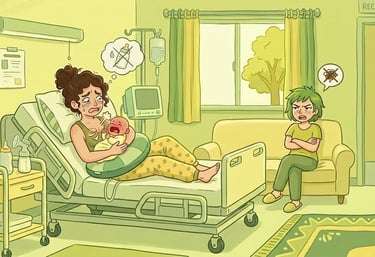
Nobody Warned You About the First Day, Did They?
You must have replayed that special moment in your mind a million times when your newborn baby would be placed on your chest, and you would feel their first breath and smell. But what you may experience in reality is a sleepy, irritable baby who is wanting milk. Then suddenly someone in the room says you're not producing enough of it. And you switch to panic mode.
Take a deep breath!!
Lets prepare you for that situation if it arises
You should know that your experience is completely normal and far more common than anyone tells expecting mothers. The first 24 hours of breastfeeding are not about perfection, but about the skin-to-skin contact and providing comfort to both you and your baby. Here is what is actually happening:
Your Milk Is Not "In" Yet
In the first 24 to 72 hours, your body produces colostrum - a thick, golden fluid that comes in very small amounts. New moms often worry they have no milk because they see so little. But colostrum is extraordinarily concentrated. Even a few millilitres are enough for your newborn baby's stomach, which is only the size of a marble on day one. Breast milk typically comes in between Day 2 and 5. Frequent nursing in these early days is exactly what signals your body to increase production. Trust your body. It is doing exactly what it is supposed to.
Initiate Breastfeeding Early, Within the First Hour
Early suckling signals your body to begin lactation and helps your uterus contract post-delivery.
In the first 24 hours, expect to feed your newborn 8 to 12 times and roughly every 2 to 3 hours, sometimes more. As the nipple reaches the back of the roof of the mouth, it stimulates sucking. And this action will cause your breast muscles to squeeze the milk towards your nipples. Frequent feeding is exactly how your body builds breast milk production.
Your Baby May Be Sleepy
Newborn babies are often drowsy in the first few hours, especially after a long labour. If your baby won't rouse easily, try skin-to-skin contact, gently stroking the soles of their feet, or unwrapping their swaddle. Do not let a newborn go longer than 3 to 4 hours without a feed in the early days.
Expect Nipple Soreness
Some nipple tenderness in the first few days is normal as your body adjusts and your baby learns to latch. What is not normal is sharp, persistent breastfeeding pain throughout the entire feed, or cracked and bleeding nipples. If that is your experience, it is almost always a latching issue and can be treated. Between feeds, allow nipples to dry naturally and use a nipple cream for relief. Doing a cold gel pad compression really eases out the pain.
Watch for These Signs That Feeding Is Going Well
You won't be able to measure exactly how much breast milk your baby is getting. Here's what to look for instead:
· Their quick sucks will change to deep rhythmic swallows as the milk begins to flow
· You can hear your baby swallowing during the feed
· They release the breast on their own, appearing relaxed and satisfied
· At least 1 wet nappy on day 1, increasing to 6 or more by day 5 to 6
· Your baby is alert between feeds, not constantly inconsolable
· Your breasts feel slightly softer after a feed
Engorged Breasts Will Come Around Day 3
When your milk comes in, your breasts may feel very full, hard, and uncomfortable. This is engorgement, which is temporary, but intense. Feeding frequently is the best way through it. If engorgement makes latching difficult, soften the areola by gently pressing it by hand to push out a little milk first. Warm compresses using hot gel pads before feeds and cold packs after can ease the discomfort significantly.
You Do Not Have to Figure This Out Alone
The first 24 hours are emotional, exhausting, and often overwhelming even for women who felt fully prepared. If something doesn't feel right, ask. Ask your nurse, your doctor, or a lactation consultant. Ask again if you need to.
© 2026. All rights reserved.